
By: Brianna Rhodes
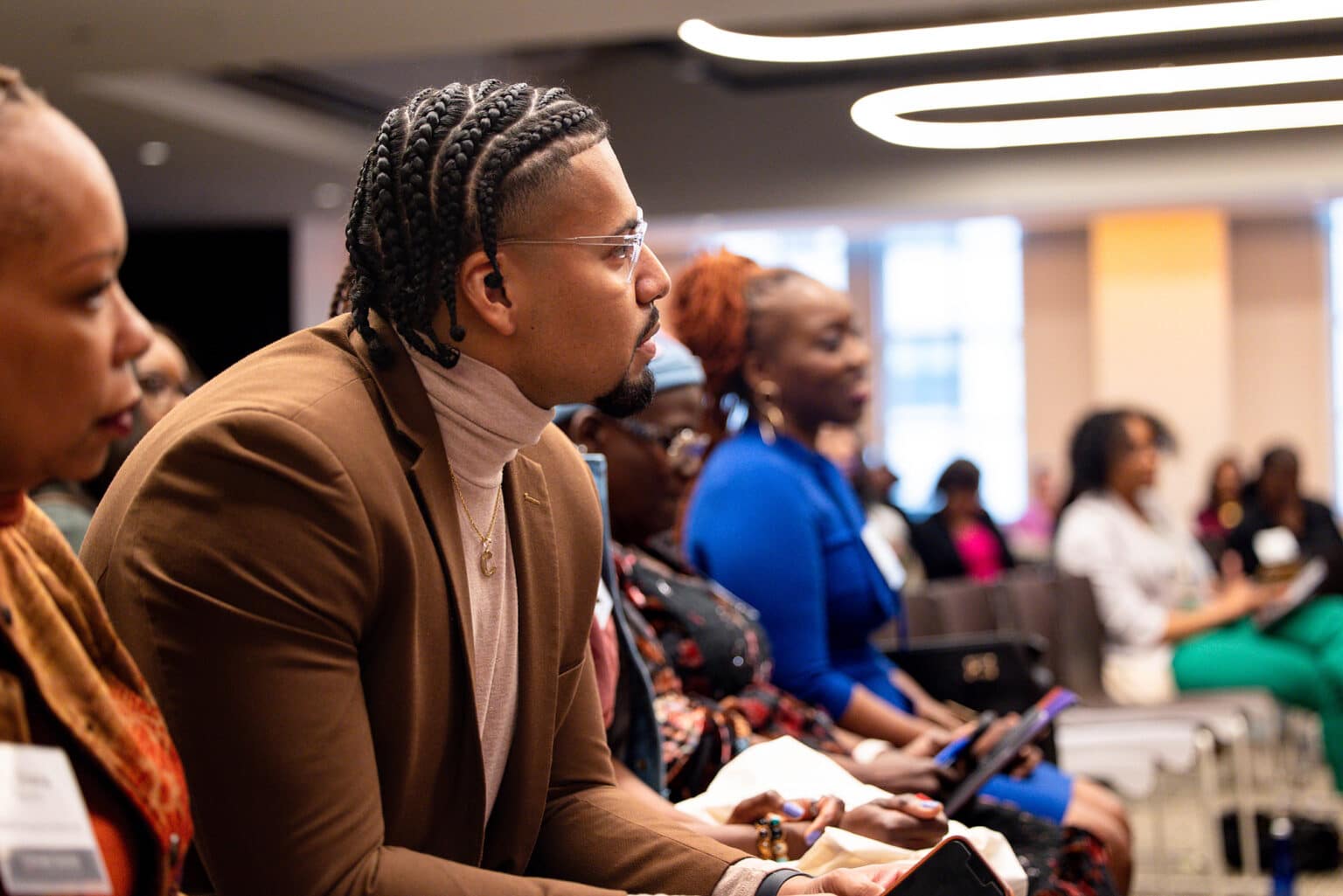
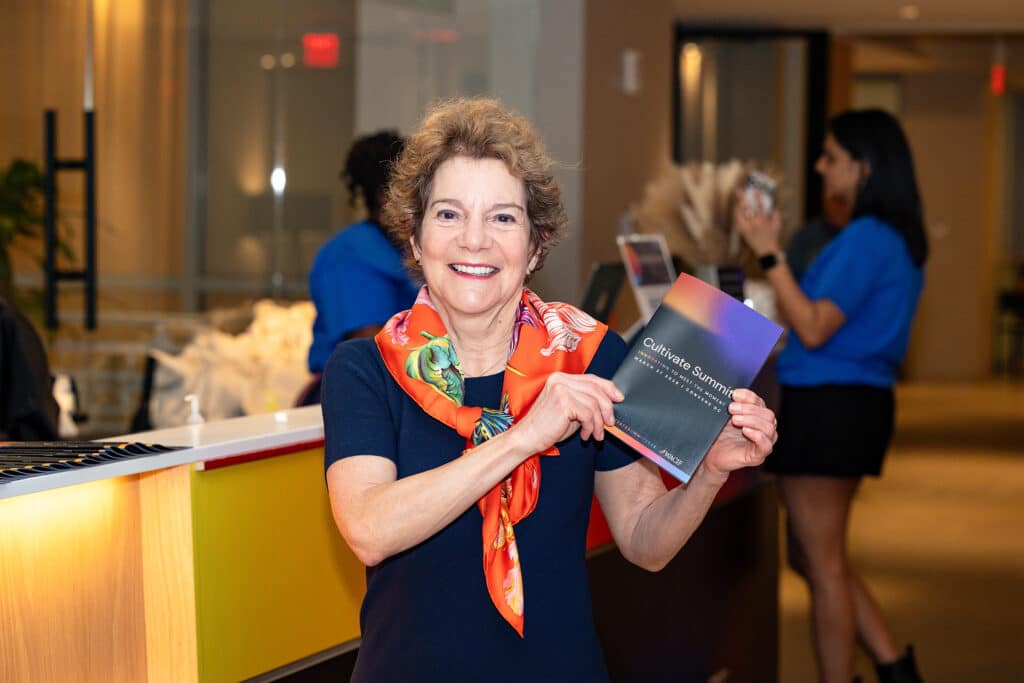
Insightful questions, impactful stories, and bright smiles filled the fourth floor of Convene as entrepreneurs, community partners, and business leaders gathered for the fourth annual Cultivate Summit hosted by the Washington Area Community Investment Fund (WACIF) on Friday, March 27 in Washington, D.C.
With nearly 160 attendees from across the DMV and as far as Illinois and Alabama, this year’s theme, “Innovating to Meet the Moment,” focused on helping founders adapt to an evolving business landscape shaped by innovation, connection, and opportunity.
Attendees participated in discussions, workshops, technical assistance sessions, and WACIF’s Innovation Marketplace, all curated to support business growth. WACIF also highlighted initiatives they launched to support founders, including the Sustainable DC Project, the Anacostia Arts Center, The Pivot Project, and the Small Business Ecosystem Quarterback Initiative.
“When things begin to work as they should, our entrepreneurs will move faster, make better decisions, and build stronger businesses and the communities they serve,” said Shannan Herbert, WACIF’s chief executive officer. “This is what innovation is supposed to do. We can create the next new thing, but can also fix what’s not working and build something better.”
Here’s a recap of how the day unfolded:
Key Takeaways
Digital and Capital Access Are Shaping the Small Business Ecosystem:
Experts shared insights on how digital access and capital continue to shape today’s landscape. Many founders are being more creative and innovative digitizing their offerings to meet consumers’ preferences and needs.
However, capital readiness remains a barrier. Experts emphasized the importance of building relationships within the financial ecosystem so entrepreneurs can understand the funding options available as they work to sustain their businesses.
They also noted that some founders are intimidated by learning how to use technology that fits their business needs. But, they emphasized that founders should lean into “intellectual flexibility” and an “adaptive mindset” to stay abreast of new strategies and new ways of working.
When small business owners feel stuck, experts stressed the importance of utilizing community resources to help them navigate change.
AI Can Level The Playing Field:
WACIF welcomed Madia Brown, the founder of Brandire Agency and Hellobrand, as the keynote speaker. Brown shared how she has built and scaled her brands using innovative tools and strategies, including AI. She encouraged small business owners to do the same in order to “level the playing field.”
Brown admitted that while AI is a “double edged sword,” it can streamline processes and improve efficiency. She also shared that she’s using Claude Code to help her upskill.
“One of the things that I’m doing with AI now is looking at all of the kinds of gaps in my business that require so much time and so much resources,” Brown said. “[They’re things that aren’t] moving the needle in terms of revenue, but still need to get done.”
AI Can Help Small Businesses’ Creativity and Brand Identity:
Brown believes that AI can help founders scale their creativity, but she believes it has formed unrealistic expectations to produce content faster. Even with AI’s help, “real creativity takes time,” she said.
“People assume that just because you generate something with AI that it is creative,” Brown said. “Reality is derivative, meaning that it’s based on somebody else’s creativity. So somebody has to be creative in the first place for you to move and create the next thing.”
Brown also shared that small business owners should continue to use expert assistance to shape the foundation of their brand to stand out and be more desirable. Heavily relying on AI increases the chances for the brand to be similar to other companies, which decreases visibility and “being chosen.”
“I call it a brand print,” Brown said. “It is important to be able to make sure you’re putting out content that people actually care about and want to stop and read.”
Session Highlights
Track 1: Resources to Support Small Business Expansion:
Attendees learned about the Entrepreneurship Centers that are supporting small businesses through incubators and accelerators. They also learned about the value of obtaining certifications to secure contracts with state, local, and corporate partners.
Sheryl Perkins, the founder of Mother’s Fynest, said she learned she may still qualify for certifications despite business limitations.
“If you don’t have any revenue and the other [requirements] that they ask for, continue pressing through and submit what you have,” she said.
Track 2: Tech Innovation:
Track 2 focused on how to prepare for the emerging tech revolution through two sessions led by Seema Alexander, the CEO, founder, and host of The AI CEO Podcast and Adalbert De La Cruz, founder of RapidLabz.
Alexander provided attendees with candid information about how AI is transforming business systems and decision-making, while De La Cruz discussed how small businesses can use AI to create frameworks to build and sell their products.
Fharyn Jackson, who owns an AI education and implementation service called the Ascend Agency, emphasized that AI opens the doors for both disruption and opportunity, so it’s important for founders to become more forward-thinking.
“It’s been very enlightening [to attend this summit],” Jackson said. “At other conferences they mention AI, but here there’s this sense of urgency behind where we are economically.”
Track 3: Pivot Project – Fed to Founder:
Connie Russell, the CEO of C L Russell Group led a two-part session, geared towards federal professionals interested in transitioning into entrepreneurship. Russell offered valuable tips on how to have the right mindset and utilize the right models and resources for building a business.
Sondra Nixon, who is a federal contractor, is developing a business that is rooted in her experience of working with the federal government, and plans to work at the state and local levels.
“Working for the federal government [I learned] if you do a good job, work hard, and pay attention to your surroundings politically, it’s a secure situation,” Nixon said. “Well, that’s changed and that security is no longer there.”
The Value of Community Sponsors and Partnerships
WACIF recognized community sponsors and partners including MasterCard, Pinnacle Financial Partners, PNC Bank, Capital One, TD Bank, CareFirst, and JP Morgan Chase for their support during the summit.
Organizations such as the Latino Economic Development Center (LEDC) and the Greater Washington Hispanic Chamber of Commerce were also present at the Innovation Marketplace to provide support for attendees throughout the day.
“Opening businesses is hard in this region,” said Bria Hodge, the director of the LEDC. “There’s red tape and things you have to get through, especially now as an entrepreneur who’s really just trying to figure out how to get off the ground. It’s so important to have resources like WACIF and LEDC that can hold your hand and walk through it with you as a partner.”
Meet the Professional Service Scholarship Winners
The summit wrapped up with 172 attendees at the Pivot Reception for networking and celebration. During the reception, three winners from the Professional Service Scholarship raffle were announced, each receiving up to $3,500 in support in areas including, marketing, capital readiness, and legal services.
Samaré Sambou, founder of Stay Golden Bliss Candles, reflected on restarting her business journey:
“I feel affirmed because two years ago I decided to take a break from doing my candles to just focus on different priorities that I had,” she said. “I’m actually relaunching this spring, and it feels like an affirmation because self-doubt told me that because I had to pause it, I’m starting from scratch. But, I have to realize I’m not starting from scratch. I’m resuming my purpose.”
Angela Harris, founder of 2638 Management Group, described the timing of her award:
“I’m speechless, I’m amazed, and grateful,” Harris said. “Being an entrepreneur has not been an easy road, and this scholarship is very timely. I’ve just received three new clients from my business and we’re actually in the process of scaling and envisioning for the next phase of our growth. So these services will be put to good use.”
Leslie Frelow, founder of The Wine Concierge, spoke about a key business decision:
“I am at that inflection point where I’m considering whether I want my business 100% online now or move it to a brick and mortar,” she shared. “Having someone with financial expertise available to help guide me through that decision process is [happening at] the right time for me now. Words can’t explain how important that is to me.”
Closing Reflection
WACIF takes pride in creating a space where small business owners can come together, learn and access tools to thrive in an ever-changing landscape.
“I hope that attendees found the resources and ideas they needed to move their business and dreams to the next level,” said Marisela Rodela, WACIF’s program director. “[The summit’s] focus was on innovation and inspiration; I hope they received those and more. I especially hope that each attendee left with a sense of community and belonging. No entrepreneur should feel like they are moving along in this community alone.”